Leaves often show root problems.
Yellowing, curl, necrosis, slow growth, wilt, and deficiency-like symptoms can all be caused by root-zone issues. Root checks must come before aggressive nutrient corrections.
THC Living Plant Atlas · Production Module
Root-zone conditions explain many leaf symptoms. This module now has eight linked starter lessons in source and the first root-zone field cards queued under Atlas Downloads.
Yellowing, curl, necrosis, slow growth, wilt, and deficiency-like symptoms can all be caused by root-zone issues. Root checks must come before aggressive nutrient corrections.
The first root downloads focus on watering and dryback, pH/EC troubleshooting, root-zone problems, and deficiency versus lockout comparison.
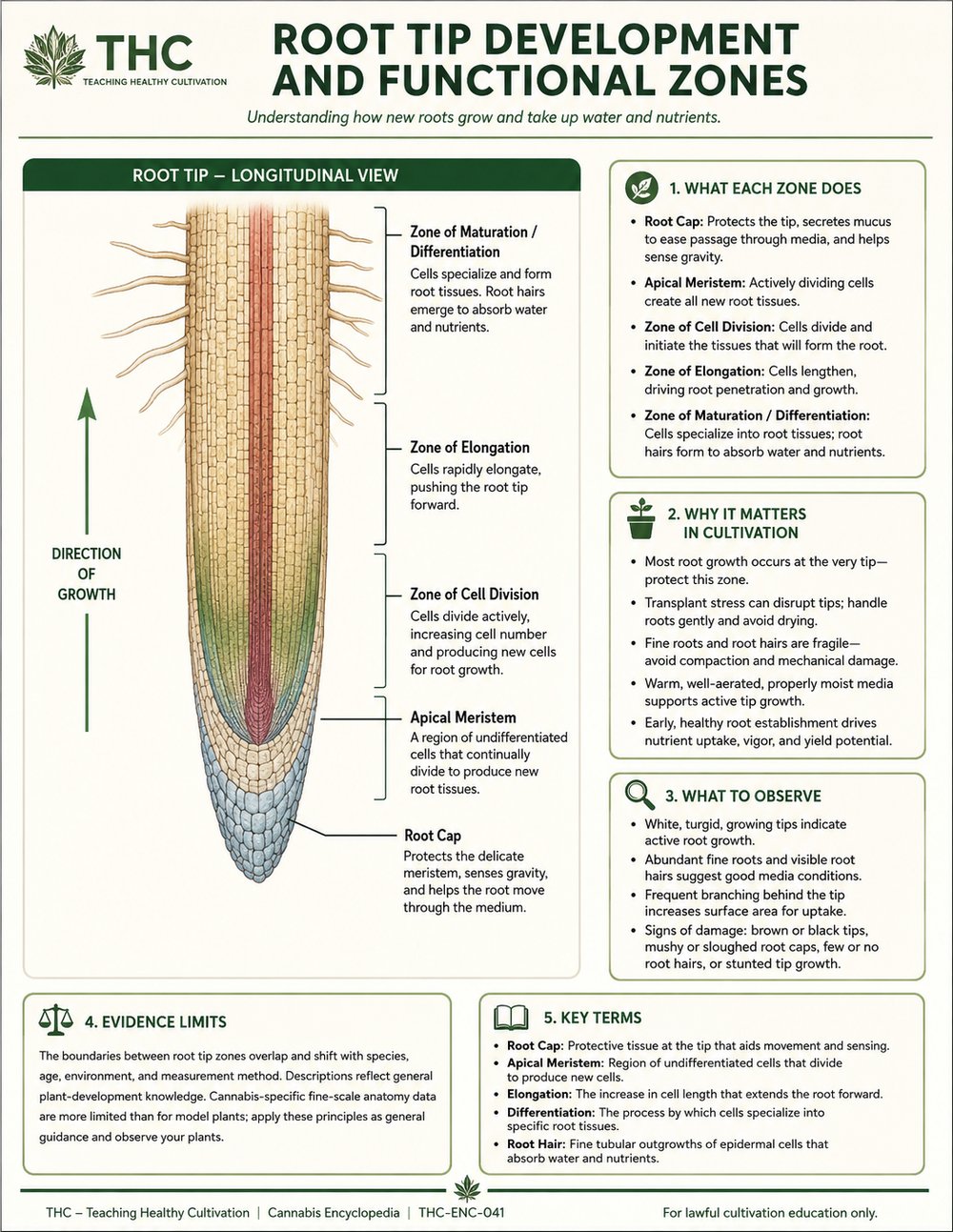
Pair anatomy with root-zone temperature, substrate moisture or mass trend, irrigation timing, oxygen/aeration context, pH, EC, and the plant response above ground.
Completed starter lessons
Primary roots, lateral roots, root hairs, root tips, and healthy root appearance.
live in sourceRoot exudates, microbes, biofilms, media biology, and nutrient cycling context.
live in sourceHow roots absorb water and how substrate moisture changes leaf behavior.
live in sourceHow pH, EC, ions, moisture, oxygen, and root health affect nutrient access.
live in sourceWhy roots need oxygen and how saturation, compaction, and low aeration create symptoms.
live in sourceWet-to-dry cycling, container weight, irrigation timing, and root-zone behavior.
live in sourceWarning signs, context checks, and how root damage can mimic deficiencies.
live in sourceStructured checklist for pairing leaf symptoms with root-zone measurements.