DTFGENETICSDREAM THE FUTURE
Teaching
Healthy Cultivation

Genetics Deep Lab · Evidence First

Genotype, Phenotype & Variation

Separate inherited genetic information from observed phenotype, then examine how environment, development, epigenetic regulation, and measurement shape the traits we see.

Core concepts

What belongs in this system

GenotypePhenotypeAllelesSegregationHeritabilityEnvironmentDevelopmentEpigenetic regulation
Function

What the system does

  • Explains inherited differences among plants
  • Provides the basis for trait segregation
  • Interacts with environment to produce phenotype
  • Creates variation available for selection
Observation

What to record

  • Replicated trait differences
  • Developmental timing
  • Architecture
  • Morphology
  • Aroma and other measurable phenotypes with consistent methods
Interactions

Keep connected causes in view

  • Environment changes trait expression
  • Age and stage affect phenotype
  • Measurement method affects apparent differences
  • Selection changes population allele frequencies over generations
Measurements

Attach numbers to the observation

  • Plant identity
  • Replicate count
  • Trait definition
  • Measurement method
  • Environment and treatment
  • Developmental stage
  • Pedigree or cross information
Evidence questions

Test the explanation

  • Is the observed trait repeatable across genetically related plants?
  • Was phenotype measured under comparable environmental conditions?
  • Is the claim about inheritance supported by segregation or progeny data rather than one plant?
Interpretation cautions

Avoid single-symptom conclusions

  • A phenotype is not the same thing as a genotype
  • One plant does not define a stable line
  • Use replicated observations before assigning a trait to inheritance

Evidence boundary: observation narrows plausible explanations; it does not prove a cause by itself. Use measurements, time course, comparisons, and appropriate testing before acting.
Reference visuals

Genotype × environment × development map with trait and phenotype examples.

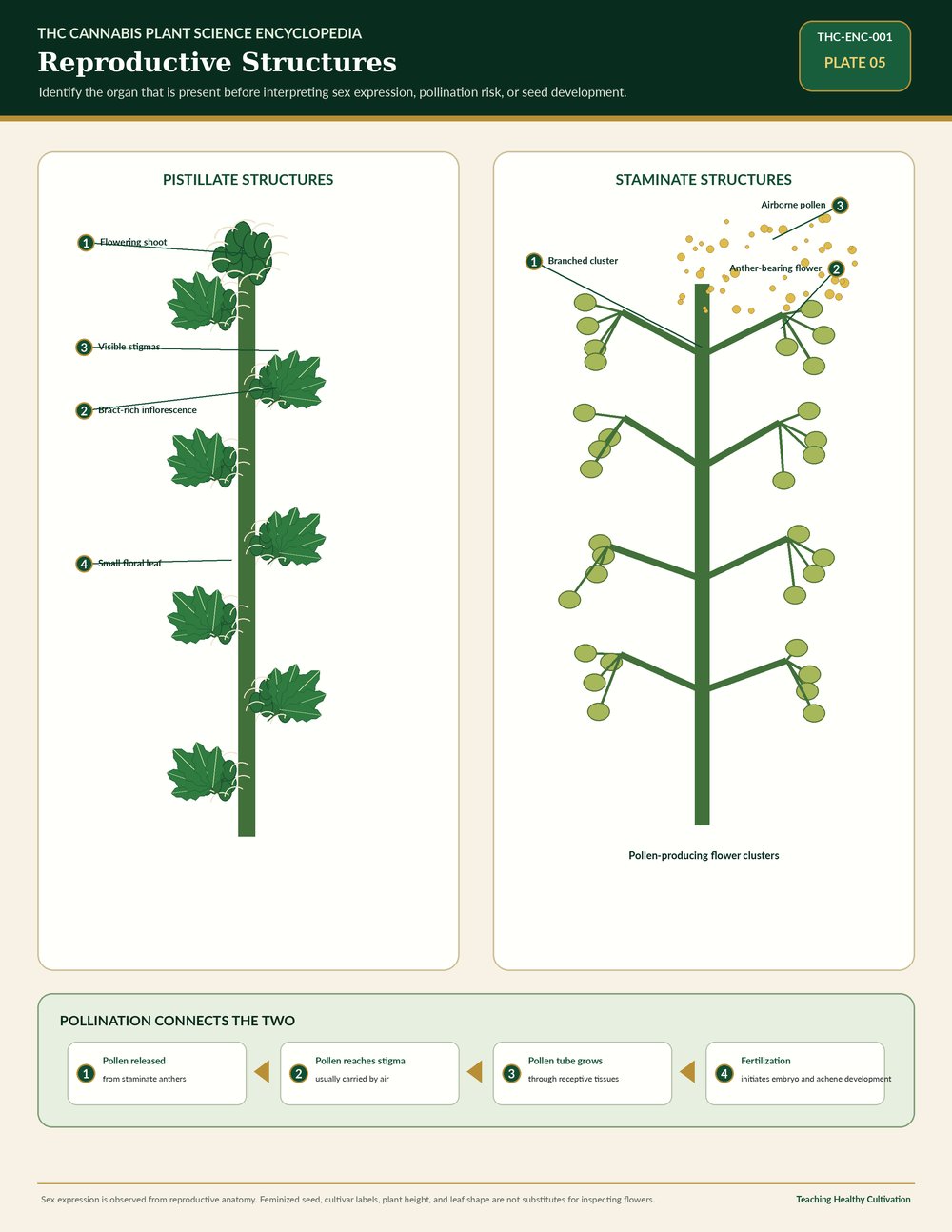
Cannabis reproductive structures educational reference
Reproductive structures